Flexible polyurethane foam (Flexible Polyurethane Foam) refers to the class of soft, resilient polyurethane foams and is the largest-volume polyurethane product. Main product types include high-resilience foam (HRF), slabstock foam, viscoelastic (slow-recovery) foam, self-skinning foam (ISF) and semi-rigid energy-absorbing foam. The cell structure of flexible PU foam is mostly open-cell, offering low density, good resilience recovery, sound absorption, breathability and thermal insulation. It is mainly used as furniture cushioning, vehicle seating cushioning and various soft laminated composites; in industrial and civil applications it also serves as filter, acoustic, shock-absorbing, decorative, packaging and thermal-insulation material.
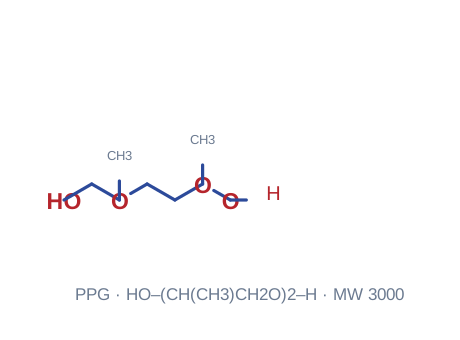
Polyether polyols are organic polymers produced by the addition polymerization of an initiator (a compound containing active hydrogen groups) with ethylene oxide (EO), propylene oxide (PO), butylene oxide (BO), etc., in the presence of a catalyst. For conventional flexible foam, the polyether polyols are mainly trifunctional 3,000 and 3,500 molecular-weight polyethers; bio-based polyether polyols using vegetable oil instead of propylene oxide as the long-chain monomer are also available.
| Model | Hydroxyl value (mgKOH/g) | Acid value (mgKOH/g) | Moisture % | PH value | Color APHA | Appearance | Viscosity mPa·s / 25°C | K/Na ions ppm |
|---|---|---|---|---|---|---|---|---|
| 3,000 MW | 54-58 | ≤0.1 | ≤0.1 | 5.5-7.0 | ≤100 | Colorless transparent liquid | 550-750 | ≤6 |
| 3,500 MW | 46-50 | ≤0.1 | ≤0.1 | 5.0-7.0 | ≤100 | Colorless transparent liquid | 550-850 | ≤6 |
Polymer polyol, also known as vinyl-polymer-grafted polyether polyol, is generally white or light cream in appearance. It is a polyol containing organic filler that can replace inorganic fillers, giving the foam higher load-bearing capacity and better resilience while improving cell structure and physical-mechanical properties. Flexible foam production mainly uses polymer polyols with 13% and 45% solids content based on a 3,000 MW polyether backbone; polymer polyols with 10%, 15% and 25% solids content are also available.
| Grade | Hydroxyl value (mgKOH/g) | Moisture % | PH | Appearance | Viscosity mPa·s / 25°C | Solids % |
|---|---|---|---|---|---|---|
| POP-2045 | 28-32 | ≤0.1 | 7.0-9.0 | Milky white liquid | ≤5000 | 45% |
| POP-2013 | 38-44 | ≤0.1 | 7.0-9.0 | Milky white liquid | ≤1500 | 13% |
TDI is one of the most commonly used polyisocyanates, mainly used for flexible polyurethane foam as well as polyurethane elastomers, coatings and adhesives. The most common TDI grade is T-80; T-100 and T-65 are also available.
| Product | 2,4-TDI % | 2,6-TDI % | Color APHA | Hydrolyzable chlorine % | Purity % | Acid value (mgKOH/g) |
|---|---|---|---|---|---|---|
| T-80 | 80.0±2.0 | 20.0±2.0 | ≤40 | ≤0.01 | ≥99 | ≤0.006 |
Two main classes of blowing agents are used for flexible polyurethane foam: water and low-boiling-point compounds, the latter mainly dichloromethane.
| Product | Acid value (HCl) % | Moisture % | Purity % | Color (Pt-Co) |
|---|---|---|---|---|
| Dichloromethane | ≤0.0004 | ≤0.04 | ≥99.9 | ≤10 |
The foam stabilizers used for flexible polyurethane foam are mainly silicone surfactants.
By chemical structure, polyurethane catalysts fall into two basic classes: tertiary amines and organometallic compounds (including carboxylates and alkyl compounds). Both are used in conventional flexible foam formulations, mainly A1, A33, DMEA, DEOA, TEOA, T-9 and T-12.
Polyurethane takes dye well. By adding dye or pigment color paste, polyurethane foam — flexible foam in particular — can be produced in bright, vivid colors.
TDCP is one of the best phosphorus-chlorine flame retardants in terms of flame retardancy and durability. It is widely used in flexible and rigid polyurethane foam, PVC, epoxy resin, unsaturated resin, polyester fiber, rubber and conveyor-belt production. Besides self-extinguishing behavior, it improves lightfastness, water resistance, antistatic performance and product gloss.
